
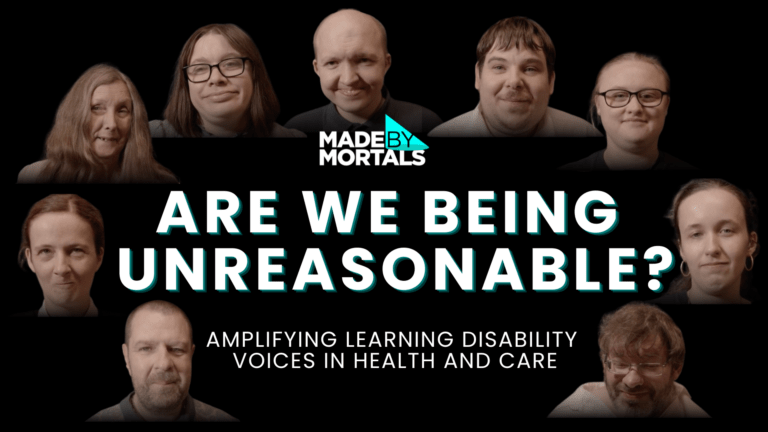
Everyone should be able to be listened to and understood, to receive information in a way that makes sense to them, and to be treated with respect. They should have a say in decisions about their own lives and have the opportunity to be meaningfully involved in research and service improvement that could affect them. None of these expectations are unreasonable. Yet, for many people with learning disabilities, they are still things they have to ask for, explain or fight for. So what does it really mean to listen to people with learning disabilities, and what happens when we move beyond simply listening to meaningful involvement?
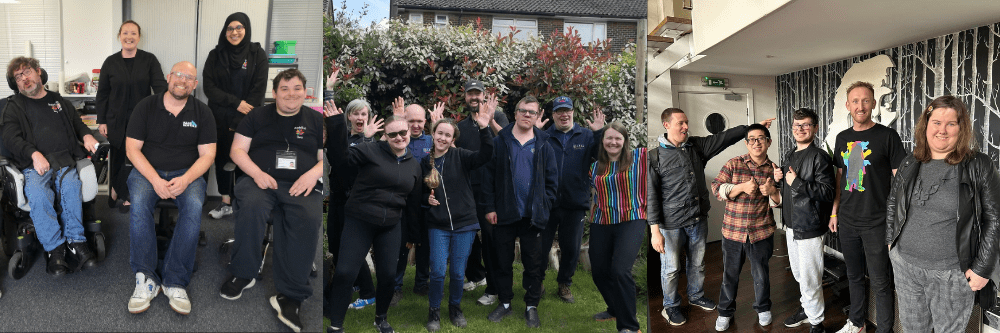
At Made By Mortals, we’ve spent the past year working alongside people with learning disabilities across Greater Manchester to explore their experiences of health, care and everyday life. Through creative co-production, we’ve created space for people to share those experiences in their own words and in their own ways. And one message came through strongly time and time again: people with learning disabilities aren’t asking for unreasonable things. They’re asking for the things we should all be able to expect from health and care.
To help researchers, NHS organisations, commissioners, charities and others working to improve health and care reflect on how they involve people with learning disabilities, and explore what more meaningful involvement can look like in practice, we have brought together our learning into a free digital resource – ‘Are We Being Unreasonable?’.
When being heard isn't enough
There has been growing recognition across health and care that lived experience should inform the way services are designed, delivered and evaluated. But there is an important difference between hearing someone’s experience and genuinely involving them in decisions.
Meaningful involvement means changing the relationship between organisations and the people they exist to serve. It means recognising people with lived experience as experts, and involving people early enough that their knowledge can actually influence the direction of a service or project, rather than asking for their views once the important decisions have already been made. Crucially, it means being prepared to listen to something that might challenge your original assumptions, and then act on it.
Why does this matter?
People with learning disabilities experience significant health inequalities. The gap in life expectancy is stark, with the average age of death for those with learning disabilities around 23 years younger for men and 27 years younger for women, compared with the general population.
There are many complex and interconnected reasons for this, but one important way we can start addressing these inequalities is understanding people’s experiences of the systems designed to support them. What gets in the way of accessing healthcare? Where do people feel misunderstood? What reasonable adjustments make a genuine difference? What happens when information isn’t accessible? What would make someone feel more confident speaking to a healthcare professional?
These are questions that can’t be answered using data alone. They require listening to people’s experiences and understanding what those experiences mean.
The value of lived experience in research
For researchers, meaningful involvement with people with learning disabilities isn’t only an ethical consideration, it can also strengthen the research itself. People who have lived experience can challenge assumptions about what matters to communities, identify knowledge gaps and help shape research questions, methodologies and communications. They can also help researchers understand whether proposed interventions or care plans will actually help.
But meaningful involvement requires more than simply inviting people into a meeting, or getting feedback on a service once it has been used. It requires approaches that make participation possible, accessible and worthwhile, and this is where creative co-production can play an important role.
Our creative approach
At Made By Mortals, we use creativity because we know that people don’t always communicate their experiences most effectively through traditional consultation methods. A conversation, survey or focus group can be valuable, but film, audio, theatre, storytelling and other creative approaches can open up different ways of expressing experiences, emotions and ideas.
Using creative methods can give people the time and space to explore something that might be difficult to articulate in a conventional setting and make complex issues more accessible. Importantly, creative co-production changes the role of the people involved as they aren’t simply providing information for somebody else’s project, they’re helping to create something meaningful together.
Creating something that other people can experience, like a video or audio story, rather than just read about, is an effective way of helping organisations understand something from a different perspective and, importantly, do something differently as a result – whether that’s in thinking, in practice, in research, or in the way services are designed and delivered.
So, are we being unreasonable?
This is the question at the heart of our new resource. Bringing together learning from our recent work with people with learning disabilities across Greater Manchester, and aligning with our ways of working, ‘Are we being Unreasonable?’ is something that people can experience, rather than simply read and file away.
The free digital resource includes:
- Lived experience stories, short films and immersive audio experiences co-produced with people with learning disabilities
- Key learning from recent projects
- Practical reflection activities for individuals and teams
- Ideas to support more meaningful involvement in research and service improvement
- Additional resources and further reading
It’s designed to help individuals and teams stop, reflect and ask some important questions about how they currently involve people with learning disabilities. Are we really listening? Are people able to influence the decisions we’re making? Are we creating the right conditions for meaningful participation? And what could we do differently?
Whether you’re developing a new research project, reviewing an existing service or thinking about how to involve communities more effectively, the resource is designed to give you something to reflect on, and something practical to take forward. It is free to access here and designed to be shared, discussed and used with teams.
If you’d like further information or to talk to us about involving people with lived experience in your own research, engagement or service improvement work, we’d love to hear from you.
Looking for ways to bring lived experience into your work?
Sign up for our Members Area to access audio stories, training materials, and workshop guides—all themed around key health & social care topics. Start exploring today!
For more information about how Made By Mortals can support your project including a quote, please email admin@madebymortals.org or call 0161 804 2078