
When professionals talk about health inequalities, the conversation can easily become dominated by statistics, policy and targets. But what happens when you begin with the everyday experiences behind those numbers?
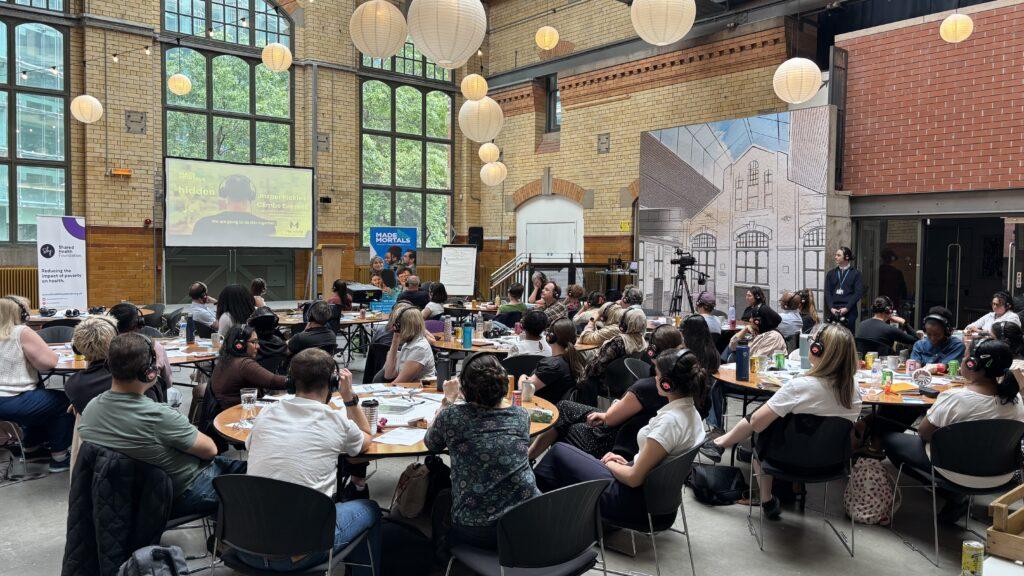
That’s what we explored at the Doctors in Deprivation Training Day hosted by Shared Health Foundation, where we shared our ‘Jasper Pickles Climbs Everest’ lived experience workshop. ‘Jasper Pickles Climbs Everest’ is an original audio story co-produced with a lived experience group from MacIntyre. Through Jasper’s story, healthcare professionals stepped into the everyday reality of navigating healthcare as an autistic person or a person with a learning disability, using imagination, discussion and shared reflection.
We’ve found that when you experience a story rather than simply hearing about it, different conversations begin to emerge. Rather than considering reasonable adjustments we should make, people began exploring what this would feel like for people like Jasper. The discussion quickly revealed something important: clinicians already knew what good care looked like. The challenge wasn’t imagining it – it was making it possible within the systems they work in.
What does a good healthcare experience look like?
When we reflected on this, workshop participants described a consistent picture of what good healthcare looks like in practice. People spoke about quieter waiting rooms, minimal wait times, home visits where appropriate, consistent support workers, welcoming assistance animals and appointments that felt personalised rather than procedural. They talked about continuity – not just with a GP, but with the whole practice team. Being recognised by reception. Seeing familiar faces. Feeling that the team understand who you are and what you need.
What are the barriers to realising a good experience?
Tapping into a wealth of knowledge and experience in the room, we interrogated why this good experience can be so difficult to deliver in practice.
Participants reflected on how gaps in communication can begin long before the consultation itself. When an appointment is booked by one person but attended by a different support worker, vital information about its purpose isn’t always passed on. Time that should be spent supporting the patient can instead be spent trying to work out why they’re there. They also reflected on how difficult it can be to access reasonable adjustment information within medical records, even when it’s already been identified. Perhaps most importantly, people recognised that not everyone can easily identify and explain the reasonable adjustments they need.
How can we overcome these barriers?
From here, the focus shifted to what could help overcome these barriers.
When considering reasonable adjustments, some ideas required technology, while others required a different way of thinking. One clinician proposed an NHS App feature which allows patients or support workers to record reasonable adjustments at their convenience, with that information flowing through to medical records automatically. Others suggested using annual Learning Disability Health Checks to capture adjustment needs more effectively. This could perhaps be supported another idea shared – creating Easy Read guides showing common reasonable adjustments so people know what they can ask for.
A theme that continued to run through the discussion was relationships. Participants explored what it means for care to feel connected and consistent, and how this can be supported in practice. Ideas included sending photos of clinic staff and consulting rooms before appointments so people know what to expect, and employing people with learning disabilities within GP practices, strengthening relationships and recognising the powerful impact representation can have on both staff attitudes and patient confidence.
While the realities of workforce pressures and staff turnover were acknowledged, there was also a shared belief that continuity of care is fundamental to delivering person-centred healthcare.
From learning to action
By stepping into Jasper’s world together, the conversation moved beyond awareness and towards action, not because the room discovered something entirely new, but because lived experience created the space to connect everyday challenges with practical changes people could make in their own healthcare settings.
Clinicians left with a clear commitment to take what they had heard and turn it into action. There was a strong sense of determination to make practical changes that improve access, communication and continuity of care for autistic people and people with learning disabilities attending their services, and to actively build more inclusive ways of working.
We understand that primary care clinicians are required to attend training around health inequalities and reasonable adjustments, and this reinforces the value of creating spaces where lived experience can sit alongside that learning. We’re looking forward to continuing to host more Lived Experience Workshops in the future.
‘I loved the immersive experience and found it so useful to feel the journey through the shoes of the person’ – Dr James Higgins, PCN Clinical Director & GP
Explore reasonable adjustments further
Are We Being Unreasonable? is our new free resource exploring what more inclusive health and care can look like in practice. Bringing together lived experience, creative stories and practical tools, it explores reasonable adjustments, health inequalities and meaningful involvement in research.
Sign up to receive your free copy when it launches on Monday 12th October.
Looking for ways to bring lived experience into your work?
Sign up for our Members Area to access audio stories, training materials, and workshop guides—all themed around key health & social care topics. Start exploring today!
For more information about how Made By Mortals can support your project including a quote, please email admin@madebymortals.org or call 0161 804 2078