
At our recent conference, ‘Walking on Eggshells: Ending Male Violence Against Women’, the learning didn’t rely on slides or written materials. Instead, we brought our participatory arts approach to life with immersive audio stories, film, music, theatre and hands-on workshops. Among all of these, music emerged as one of the most powerful tools in the room.
“The music being composed live in the conference was fantastic. I loved looking around the room and seeing everyone’s smiles getting bigger throughout!” – Safeguarding Board Business Manager
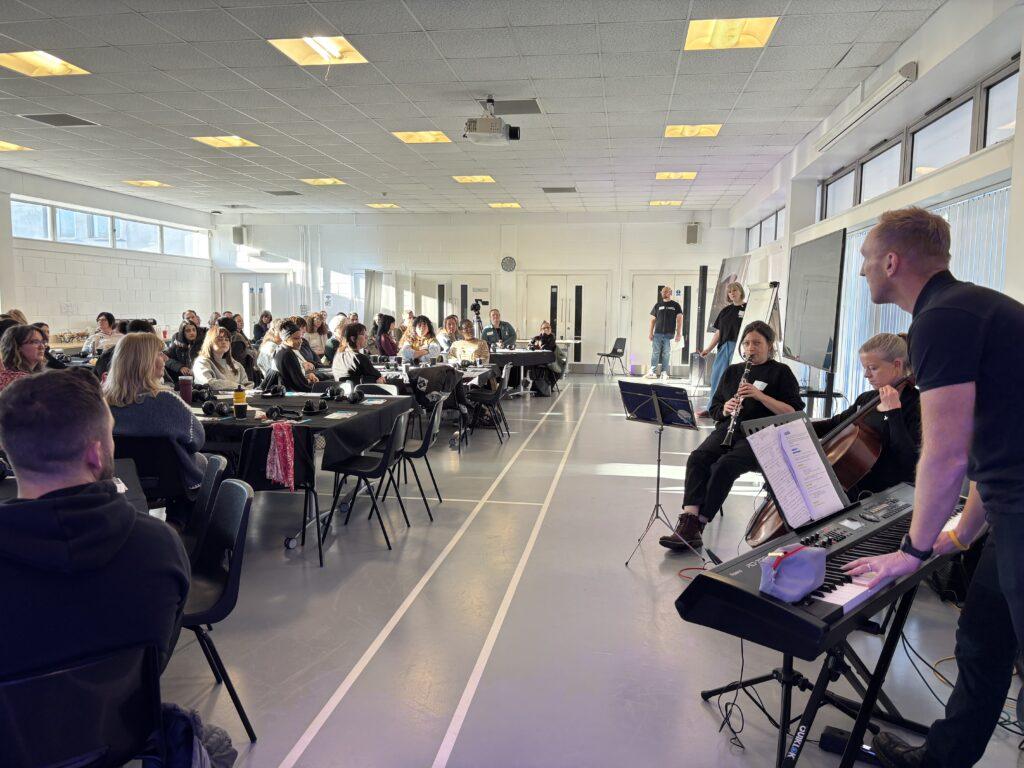
A composer, cellist and clarinettist sat alongside delegates, listening closely as people shared reflections throughout the day. In real time, they transformed those thoughts and feelings into sound, slowly building a musical portrait of Jessica, the fictional practitioner who had anchored our learning from the start.
Music has an extraordinary way of bypassing the analytical mind. It slips past rational analysis and invites us to feel, notice and process experiences we might otherwise push aside. For practitioners working in emotionally demanding environments, this can be a rare opportunity to reflect in a way that feels both safe and spacious. Delegates didn’t need musical experience to participate; they simply shared experiences, feelings and ideas, which the musicians translated into sound.
Slowly, a soundscape began to form. Gentle melodic phrases hinted at Jessica’s childhood and the innocence that still shaped parts of her worldview. Lower, heavier tones captured the doubts she carried into her work. Breath-led cello notes suggested exhaustion, the kind that builds after a difficult week or a demanding home visit. The clarinet added a touch of lightness and curiosity, an echo of Jessica’s quirky personality, while rhythmic piano patterns mirrored her love of running. Woven through it all were subtle musical echoes of the case studies explored during the day, reminding listeners of the weight of the stories that practitioners hold.
One of the most moving moments came when the musicians transformed a delegate’s reassuring words -“Jessica, it’ll be okay” – into a simple, gentle motif. Hearing that line transformed into melody was a quiet reminder of how generously practitioners support others, and how rarely they offer the same kindness to themselves.
When the finished piece was performed at the end of the conference, delegates described feeling grounded, connected and unexpectedly moved. The music captured the complexity of the day – the challenges, the hope, the frustration, the shared commitment to change – in a way that words alone could not quite articulate.
“This has been an amazing experience. The participatory focus on the day was perfect and so engaging. The music – inspiring and mesmerising – captured the character we all created and was very emotional and moving.”
– Children & Young People’s Safeguarding Lead
Music brought people together, helped them access emotional truth and created a sense of renewal. It reminded us that creativity is not an optional extra in safeguarding training, it is a valuable route to deeper empathy and understanding. If you’d like to learn more about how participatory arts can transform your lived-experience training, you can request the full conference report from Made By Mortals here.
Looking for ways to bring lived experience into your work?
Sign up for our Members Area to access audio stories, training materials, and workshop guides—all themed around key health & social care topics. Start exploring today!
For more information about how Made By Mortals can support your project including a quote, please email admin@madebymortals.org or call 0161 804 2078